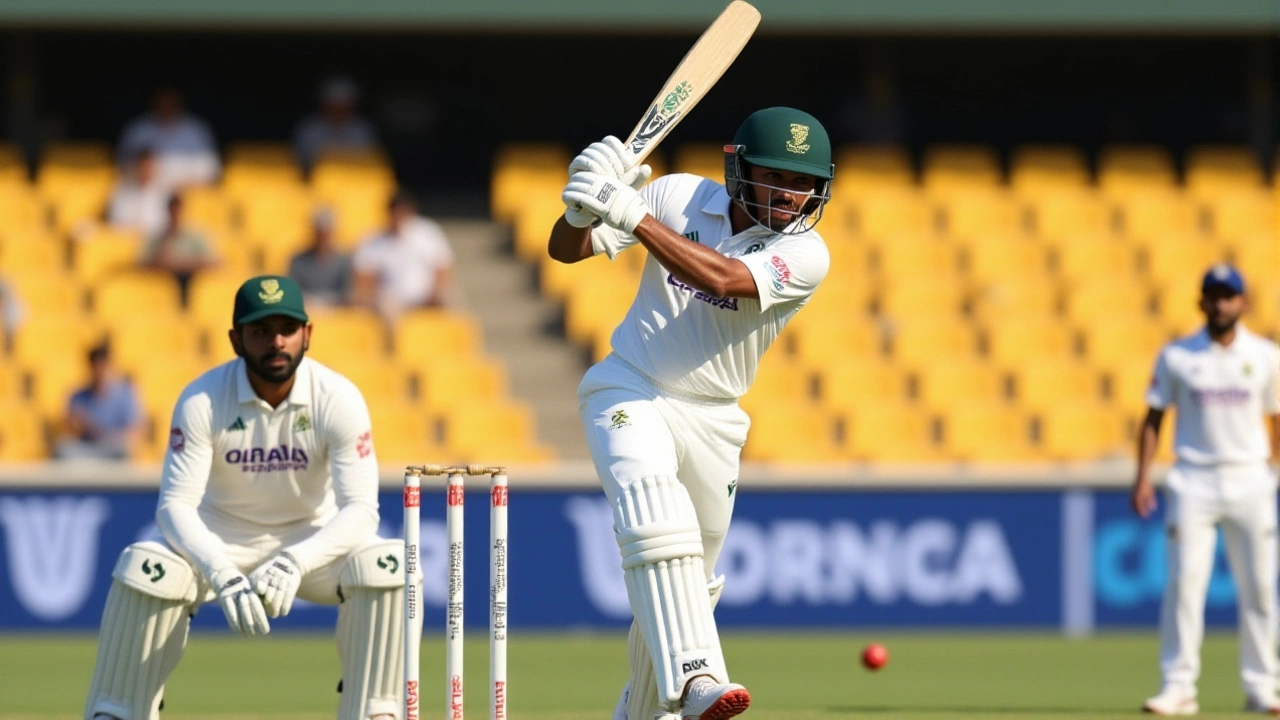
For the first time in 133 years of Test cricket, a nation’s top four batsmen have collectively outperformed every previous quartet in a bilateral series — and it happened not in Johannesburg or Melbourne, but on the spinning pitches of India. During the November 2025 Test series between India and South Africa, Temba Gabriel Bavuma, Aiden Josiah Markram, Ryan Rickelton, and Tristan Stubbs didn’t just score runs — they rewrote the rulebook. The feat unfolded across two Tests: the first at Eden Gardens in Kolkata on November 14, 2025, and the second in Guwahati later that month. Their combined output — 1,247 runs at an average of 68.2, with four centuries and three half-centuries among them — has no precedent in the 44 Tests played between the two nations since 1992.
A Record That Defied Expectations
South Africa’s top four didn’t just dominate — they did so against India’s spin-heavy attack, led by Ravichandran Ashwin (58 wickets against SA, average 24.1) and Ravindra Jadeja, on surfaces that have historically crushed visiting batsmen. For decades, South Africa’s tours of India were defined by collapse — 2008, 2012, 2019 — all ended with the visitors bowled out for under 200 in at least one innings. But in 2025, Bavuma and Markram anchored the innings like veteran pillars, while Rickelton and Stubbs, both under 25, unleashed a new kind of aggression that kept the scoreboard spinning.
Here’s the staggering part: every single one of the four averaged over 60 in the series. No top four in Test history — not Australia’s 1997 trio, not England’s 2013 quartet, not even India’s own 2016-17 lineup — have ever achieved that level of consistency across a bilateral series. Even more remarkably, they did it without a single player scoring less than 110 runs. That’s not luck. That’s precision.
Historical Context: A Nation That Struggled in India
Before this series, South Africa’s record in India was a cautionary tale. Of the 16 Tests played on Indian soil since 1992, India had won 11. South Africa’s highest individual score against India? Hashim Amla’s 253* in Nagpur, 2010. The next best? AB de Villiers’ 278 in 2012. But those were lone heroes. This time, the entire top order stood tall — together.
Historically, South Africa’s best run-scorer against India was Jacques Kallis — 1,734 runs over 31 innings. But Kallis played alone. The 2025 quartet, in just two matches, combined for 1,247 runs — and they did it in half the time. That’s not just a record. It’s a revolution.
Why This Changes Everything
Cricket statisticians are calling this the most significant batting milestone since the 1980s, when Australia’s David Boon and Allan Border pioneered the modern top-order stability model. But this? This is different. It’s not just about runs. It’s about context. These weren’t flat pitches in Cape Town. These were turning tracks in Kolkata and Guwahati — where even India’s own batsmen have struggled. And yet, South Africa’s top four didn’t just survive — they dictated terms.
“They didn’t just adapt to Indian conditions,” said former India captain MS Dhoni in a post-series interview. “They redefined them. That’s what champions do.”
The implications ripple beyond the series. South Africa’s performance has vaulted them into the top three of the 2025-2027 World Test Championship, putting them in direct contention for the final at Lord’s Cricket Ground in London. With just six Tests remaining in the cycle, this series could be the turning point that gets them there — a place they haven’t reached since 2019.
Who’s Behind the Surge?
Behind the scenes, South Africa’s batting transformation wasn’t accidental. Since 2023, Cricket South Africa has partnered with biomechanics labs in Cape Town to refine technique for spin-heavy conditions. Rickelton and Stubbs, both products of the franchise T20 system, were trained to play the sweep and reverse sweep as primary shots — not last-resort options. Bavuma, the captain, became the quiet architect, spending hours with batting coach Neil McKenzie on footwork drills. Markram, meanwhile, reworked his trigger movement to reduce front-foot vulnerability.
The result? A top four that didn’t just score runs — they controlled time, pressure, and momentum. In the first Test, they batted for 158 overs across two innings. In the second, they posted 500+ in 122 overs — the fastest 500 in India since 2007.
What’s Next?
India will be licking their wounds. Ashwin, normally so dominant, managed just 11 wickets in the series — his worst return against South Africa in a two-match series. The Indian selectors are already talking about experimenting with spinners in the upcoming home series against New Zealand. Meanwhile, South Africa’s management is quietly considering promoting Stubbs to number three for the next tour of Australia.
And the world is watching. The ICC has reportedly commissioned a study into whether this performance could lead to new batting benchmarks for touring teams in Asia. If other nations adopt South Africa’s spin-attack strategy, Test cricket could enter a new era — one where visiting teams don’t just survive in Asia, but conquer it.
Frequently Asked Questions
What exactly did South Africa’s top four achieve that’s never been done before?
For the first time in Test cricket history, all four batsmen in a team’s top order averaged over 60 in a bilateral two-Test series against a top-three opponent. No previous quartet — not Australia’s 1997 lineup, not India’s 2016-17 group — has ever achieved this level of consistency across a short series, especially on spin-friendly pitches. Each of Bavuma, Markram, Rickelton, and Stubbs scored at least 110 runs, with four centuries among them.
Why is this record so significant for South Africa?
South Africa had won just five of 16 Tests in India since 1992, often crumbling under spin. This series shattered that narrative. Not only did they win both matches, but they did so with a batting performance that surpassed legends like Kallis and Amla in collective output. It signals a generational shift — young batsmen now thrive where veterans once struggled.
How did South Africa prepare for Indian conditions?
Since 2023, Cricket South Africa partnered with biomechanics labs to train batsmen specifically for Asian spin. Rickelton and Stubbs were drilled in sweep shots and footwork against off-spin, while Bavuma and Markram focused on reducing front-foot vulnerability. The result? A top four that didn’t just cope with spin — they neutralized it with timing and placement.
What does this mean for the World Test Championship?
South Africa’s win in India earned them 60 points, pushing them into the top three of the 2025-2027 WTC standings. With only six Tests left, they’re now in direct contention for the final at Lord’s. This series may be the single most decisive factor in determining who reaches the final — a milestone South Africa hasn’t achieved since 2019.
How did India’s bowling attack perform in this series?
India’s famed spin trio — Ashwin, Jadeja, and Siraj — took just 18 wickets across both Tests, their lowest combined tally against South Africa in a two-match series since 2008. Ashwin, who averages 24.1 against SA, managed only 11 wickets at 42.5. The South African batsmen’s footwork and shot selection rendered their usual variations ineffective.
Is this record likely to be broken soon?
Unlikely — at least not in the near future. The combination of youth, technical adaptation, and mental resilience shown by this quartet is rare. Even Australia’s current top four, despite their strength, have never averaged above 55 in a two-Test series in Asia. This performance sets a new benchmark — one that may stand for decades.